


At the end of September, my wife and I flew to Portugal again (for the fourth time this year!) to delve even deeper into the world of Portuguese wines and, this time, also to explore the Dão region. To immediately put all the worried voices at ease who fear that I am no longer a real Frenchman: don't worry, there is no danger. Nevertheless, we intend to redesign the wine program of Maître Philippe & Filles, curating it better so that we can present you with an even more special selection. This includes slightly reducing the proportion of French wines, while taking great care to offer you only excellent, affordable, and special wines, predominantly from direct imports, which you won't find anywhere else in Germany. At the same time, we will expand the program of Portuguese wines. I won't go so far as to claim that Portugal is the new Tuscany, but the country manages to establish a connection between the past and tradition on the one hand and the future with its modern wines on the other, like no other country currently does. You as our customers can only benefit from this, especially since the quality and value for money are truly convincing.
This time our tour takes us again to the Douro Valley, which we already visited in the summer, and then to the slightly further south inland region of Dão.
Our first appointment is with Pedro Maria Barbosa in Vila Nova Foz de Cõa in the Douro Alto. Pedro is responsible for all details of viticulture at Quinta do Vale Meão and also owns a few vineyards in Amarante, from which he produces his own wine. He receives support from the oenologist of Quinta do Vale Meão.
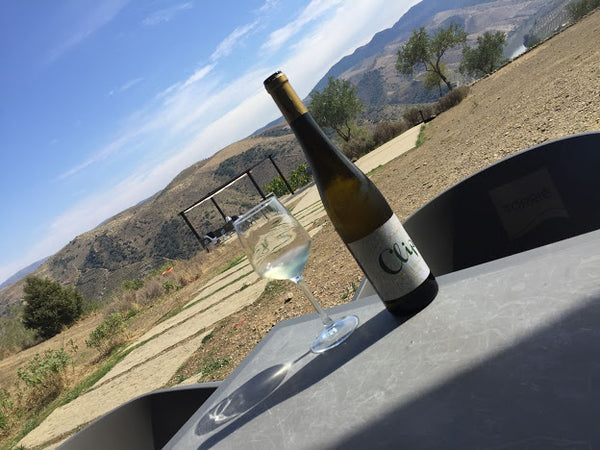
We are particularly enthusiastic about Pedro's fantastic Vinho Verde called "Clip" from the autochthonous Loureiro (laurel) grape variety, which may replace our current Vinho Verde. It is light, beautifully fruity, and has only 11% alcohol.
We tasted it on the terrace of the Douro Museum in Foz Cõa, from which we had a magnificent view of the Douro and Cõa rivers. We also ate typical Portuguese petiscos and felt like gods in Portugal ;)
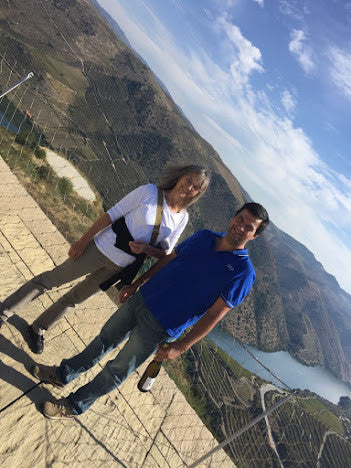
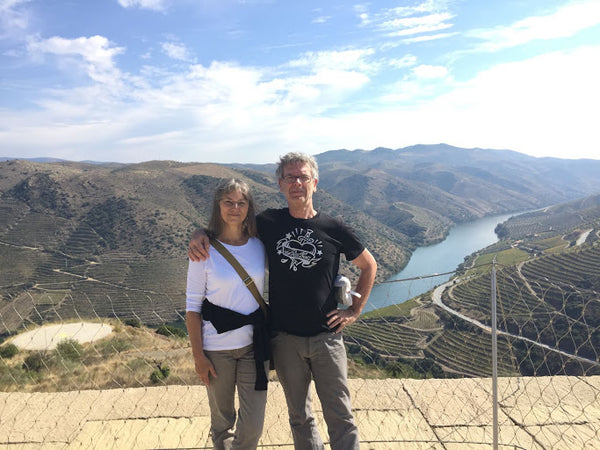

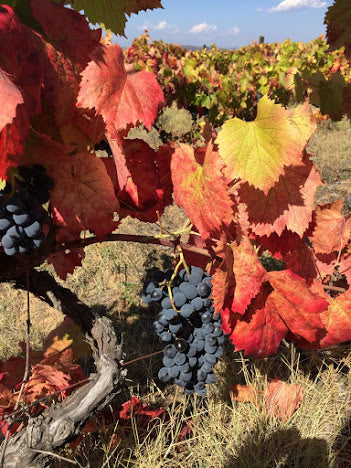
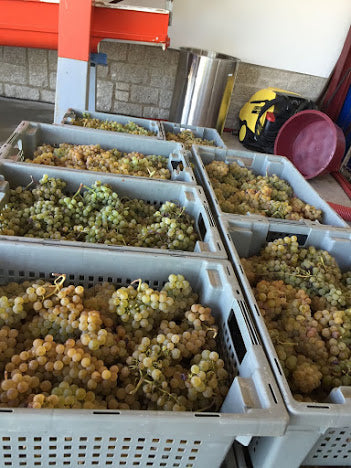
In the evening we then went to Rita Marques Ferreira, whose wines (Conceito, Contraste, Bastardo, and the Port wines) we already have in the program and who is part of the "Young Portuguese Winemakers" group. Rita's vineyards are located in Cedovim at an altitude between 500 and 700 meters. The red grapes grow on schist, the white ones on granite.
When we arrived at her place around 7 p.m., she and her team were just cleaning the cellar facilities to loud heavy metal music, with a glass of gin in hand. This clearly shows that a new generation of winemakers is now in command.
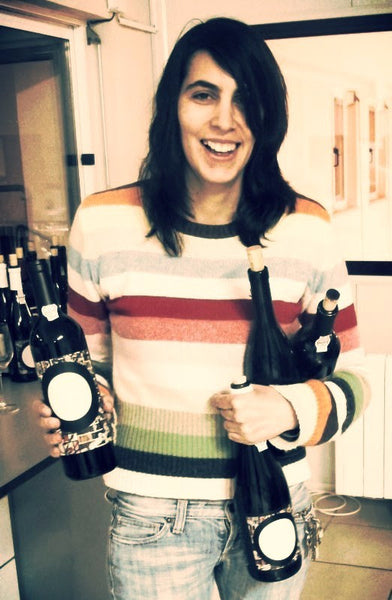
Her driving force is passion. Passion for her profession and the vision of combining the tradition of Portuguese viticulture with the knowledge and techniques acquired abroad to produce exceptional wines and once again propel Portugal to the forefront of Europe's wine countries. Accordingly, the working hours for Rita, her oenologists, and friends were quite unusual: during fermentation (natural and spontaneous), they spend the night in the cellars to make sure the temperatures do not climb too high.
After a spontaneous wine tasting of the new wines (Brut, Cuvée, and Port wines), we were invited to dinner with the whole family. It was a great pleasure for us to now also get to know Rita's husband Luís, their two children together, Rita's mother (with whom it all began), her grandfather, the oenologists and friends, and not to forget the housekeeper Fatima (cook, housekeeper, and nanny all in one). After dinner, we returned to our monastery hotel – while for Rita and her crew, the night ended in the cellar.
After a day off, we continue our route and drive to the Dão, which can also be called the Burgundy of Portugal. The growing area is located on a high plateau (400 to 600 meters) with predominantly granitic rock and sandy soils, surrounded and protected by three mountain ridges.
Here we mainly want to meet Antonio Madeira, a Franco-Portuguese from Paris, whose family comes from Gouveia, a small town in the Centro region. We also really want to meet Alvaro Castro from Quinta da Saes. We kill two birds with one stone and simply meet both together, which is no problem, as the two know each other well and also produce wines together. So Antonio produces all his wines with the help of Alvaro's oenologist Luís Miguel, whom we had already met at the wine fair in Lisbon: he produces his white wines at Alvaro's, as his facility has the necessary equipment required for these delicate wines. He makes the red wines in his own cellar.
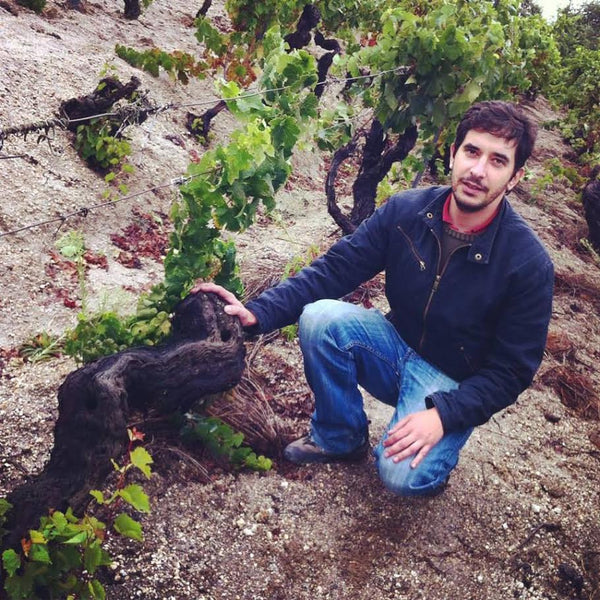
Antonio had only returned from Lisbon the evening before our appointment. We meet him at work: he is currently busy treading his red wine cuvées and controlling the temperatures. He interrupts his work for us and drives out into the vineyards with us. Antonio is what you would call a garage winemaker. This means that he does not own his own vineyards, but rents them from his friends, relatives, and neighbors. And the work involved is done together by the whole family: father, mother, aunts, uncles, cousins, parents-in-law ... everyone pitches in. The special thing about Antonio's wines is that he works almost exclusively with very old vines that only exist in this region. We are introduced to the whole team. Then a journalist joins us, who is currently writing a book on the topic of old vines, and Antonio leads us to some of his over a hundred-year-old vines.
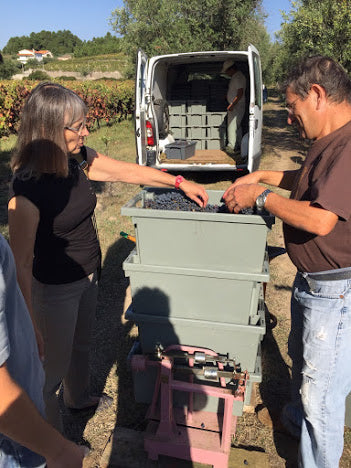
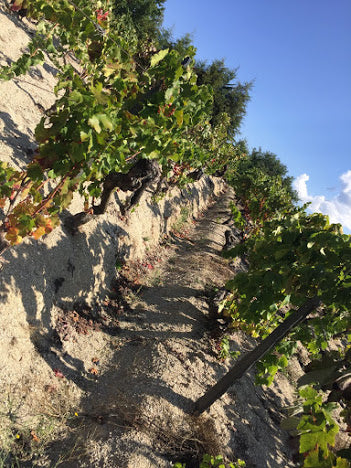
Back in his wine cellar, we are allowed to taste the fresh must of his wines and the already more advanced wines. Afterwards, we are invited to a joint lunch. About 11 to 12 people squeeze into the small kitchen, there is Bacalhau with zucchini from the garden, the well-known Portuguese cheese from Serra da Estrela, and of course Antonio's wine, which the whole family is so proud of.
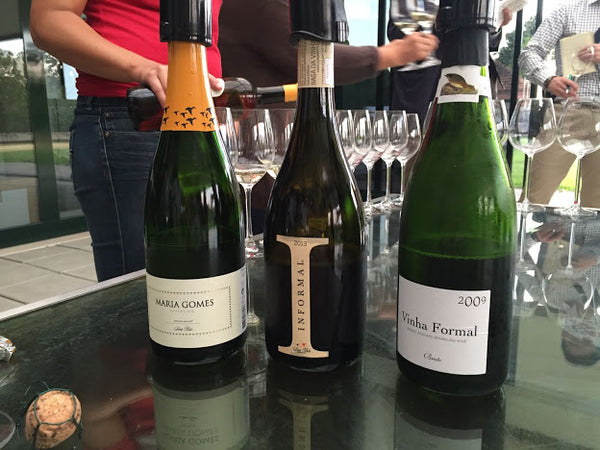
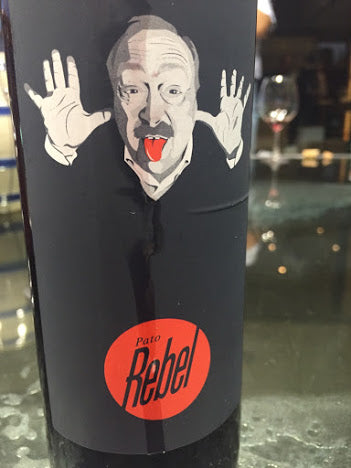
Our last stop takes us to Luís Pato, the king of Baga, whose family has been making wines since the 18th century. We are particularly interested in his fantastic sparkling wines in the style of Crémant, made from the famous Baga grape, Touriga Nacional, and Maria Gomes. For this, we drive to the Bairrada region, west of the Dão, between Coimbra and Aveiro. We meet Luís and his youngest daughter Maria, who had already visited us in Berlin, and are invited by them to a comprehensive tasting of their wines, in which several Japanese and Canadian sommeliers also participate. Our conclusion: Pato is not called the king of Baga for nothing! We are particularly enthusiastic about his "Espumantes", sparkling wines, which are distinguished by a special fine creaminess. We had already ordered the sparkling Maria Gomes from 2014 and the sparkling Baga Rosé from 2012, and we are now looking forward to welcoming them very soon into our assortment.
So you can see: there is still much to discover here ... And we would like to share that with you!
That is why you can taste the most beautiful wines from our exploration tours as part of a Festa Portuguesa, which takes place at our place on October 16 and 17. For this occasion, the three winemakers Luis Louro from the Alentejo, whose Alento wines you already know and love, Rita Marques Ferreira, the passion-driven heavy metal winemaker from the Conceito ("Concept") winery, as well as Antonio Madeira, will visit us. They will pour their wines (Rita and Luis on both days, Antonio on Saturday) and talk about the "Revolution on the Douro", the blessing and curse of autochthonous grape varieties, and why winemakers should travel more. In addition, you can taste over 10 open wines and ask our guests in a personal conversation (all three speak English) what you have always wanted to know about Portuguese wine …

