In the last week of February, my wife Efi, our two daughters Anaïs and Noémie, and our granddaughter Rosalie and I flew to Porto. Maître Philippe & Filles were on the road once again. The destination of our trip? Two important wine fairs were taking place in Porto that week: Essência do Vinho, at the Palacio da Bolsa, and Simplesmente Vinho in the ruins of the Convento de Monchique.
At Essência, we had an appointment with our most important suppliers from Portugal: Luís Louro and Inês Capão from Adega do Monte Branco. They had brought along the new Alento Rosé and Branco, and we took the opportunity for a small tasting. Since the wines – how could it have been any other way? – are very successful, we immediately struck out and increased our Rosé reservation right away. Apart from this pleasant reunion, however, Essência was not interesting to us, as it was predominantly large groups. The old, magnificent building is, however, always worth a visit.

Essência do Vinho at the Palacio da Bolsa
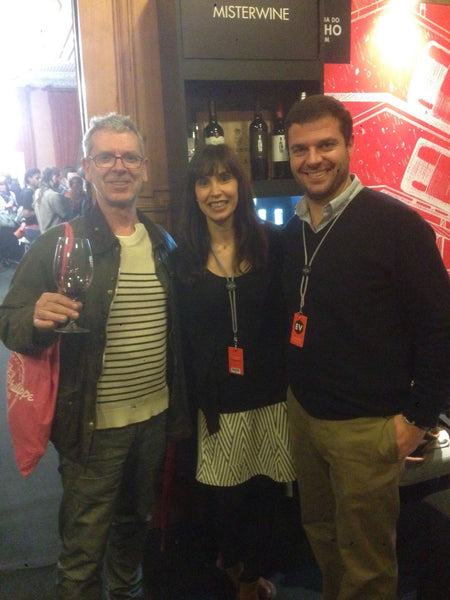
Philippe Causse, Inez Capão, Luís Louro at Essência do Vinho
That same evening, Luís invited us to dinner at the famous restaurant "Paparico". The food was truly excellent, and we first enjoyed a very nice "old" Alvarinho from Alselmo Mendes, followed by the Monte Branco Tinto from Luís. It was actually quite a bit better than the wine the innkeeper had recommended to us: a Covila Tinto from Cabernet-Sauvignon, although that one naturally doesn't have to hide itself either. After this direct comparison, it became clear to us once again that Portugal really doesn't need foreign vines – there are so many good indigenous grape varieties there, more than 300!
Simplesmente Vinho, the other fair, was a more important date for us, as smaller, more interesting winemakers are represented there. Here we were able to taste many exciting new wines, meet some familiar suppliers again, and above all, get to know many nice new winemakers.
First, we met Antonio Madeira, the "Frenchman from Dão", who visited us last year on the occasion of our "Festa Portugesa" in Berlin, and whom some of you probably still know. Anaïs and Noémie tasted his entire range and had a lot of fun with it. We still have a few bottles of his Vinhas Velhas 2012 in stock. So if you haven't made his acquaintance yet, you should hurry up now. The wine is light and expressive, with a mineral, slightly iodine flavor that reflects the granite-rich soil on which the wine grows.
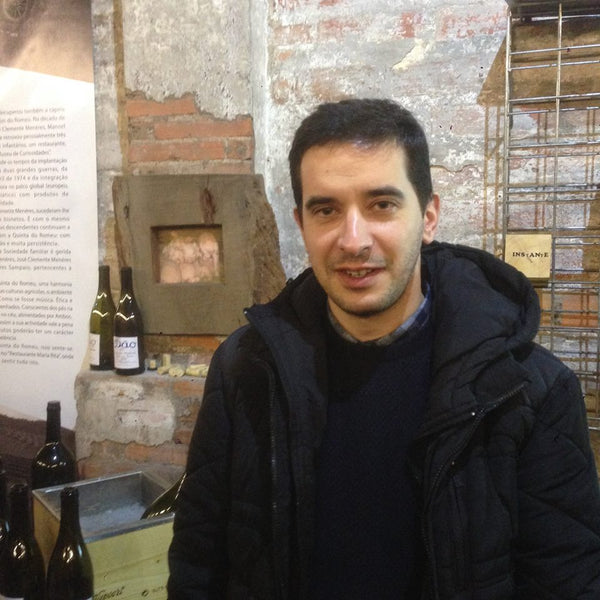
Antonio Madeira at Simplesmente Vinho
Afterward, we had a long conversation with Miguel Louro, the owner of Quinta do Mouro (and Luís's father), and took the beautiful opportunity to taste all his wines, which, as expected, we liked very much again. It's good that we were able to secure the last 120 bottles of the Quinta do Mouro 2009 beforehand, because after the Parker points were awarded – he received 95/100 – the wine is completely sold out.
We also visited the stand of Luis Pato from Bairrada, who himself was not there, but was represented by his highly pregnant youngest daughter Maria. From her stand, we were drawn on to Marta Soares from Casal Figueira, whose white wine we tasted with great pleasure. It is made north of Lisbon from the indigenous grape variety Vital.
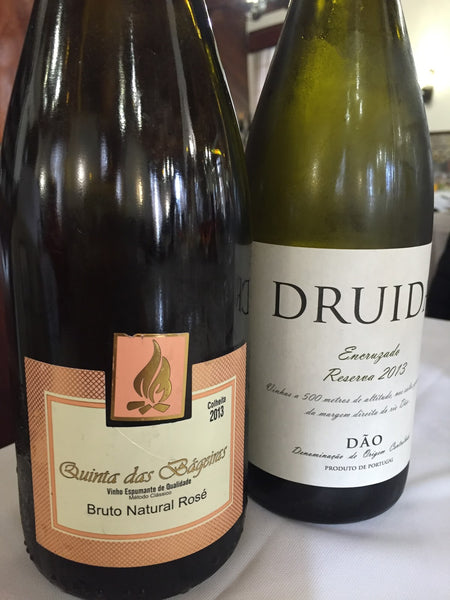
Right next door was the stand of Quinta da Bageiras from the Bairrada region, an area famous for Espumantes (Crémants). We were particularly enthusiastic about the Espumante Branco Brut without dosage 2011 (from the Bical grape), freshly disgorged, with very fine mousse and a complex freshness on the palate. The Espumante Rosé 2013 from the Baga grape (also "Zero Dosage") also pleased us very much. We tasted it a day later as an aperitif at the restaurant "O Gaveto" in Matosinhos, the old fishing port north of Porto. Quinta da Bageiras is definitely a winery with which we can imagine a cooperation.
A particularly important stage was, of course, the stand of the Young Winemakers from Portugal, among whom Rita Marques Ferreira belongs, with whom we already work very successfully. She was also at our "Festa Portuguesa".
The Vinho Verde "Clip" from 100% Loureiro from her colleague Pedro Maria Barbosa will replace our current Vinho Verde. It is very pleasant, fresh and fruity, without residual CO2 and beautifully mineral. If all goes well, it will arrive just in time for asparagus season.
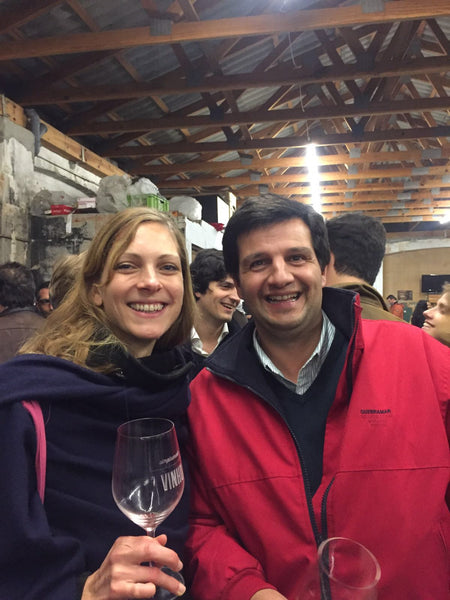
Noémie Causse and Pedro Maria Barbosa at Simplesmente Vinho
At the Young Winemakers, we then met Frederico Lobão from Gerações de Xisto, a very small producer of high-quality olive oil from Douro Alto. Frederico left us a sample bottle of his olive oil, which we are truly enthusiastic about. It is dense, complex, golden with green reflections, powerful and elegant, and carries distinct notes of fresh artichokes. Added to this is an incredible price-performance ratio, which is particularly surprising when you know that the olive oil from Douro Alto is the result of hard, real, traditional manual labor.
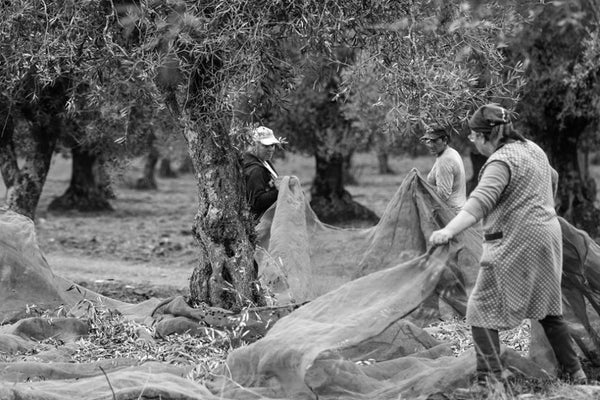
Olive harvest in Douro
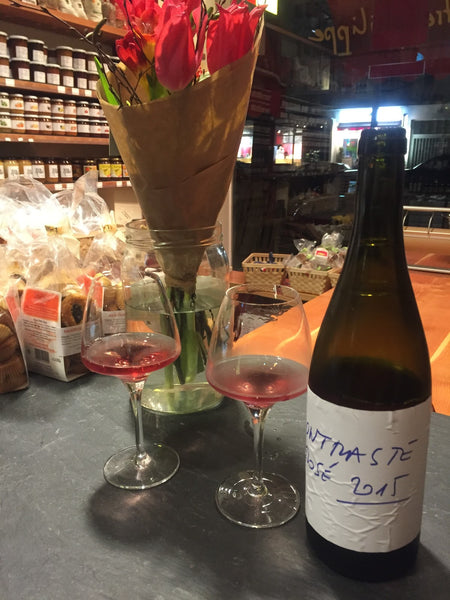
In addition to the olive oil, we were able to take two more particularly beautiful souvenirs home from Porto: the Contraste Rosé from the house of Conceito (Rita Marques Ferreira) and a white Port wine, the result of the collaboration between Rita and the well-known Madeira producer Barbeito. The Rosé delighted us and the whole team so much that we simply bought the entire production. It is "only" 1,200 bottles, but with the quality, we are not sure if that will last for the summer ...
An absolute new discovery was the wines of Nuno Mira do O, who is bringing Portugal back to the top of the wine world. Like many of his colleagues, Nuno is also around 30, learned the profession of a winemaker, then studied ecology, further educated himself abroad (often Bordeaux, California, or New Zealand), and then made his fortune on a Quinta in his homeland before deciding to settle down as a "Garage Winemaker" in Dão and Bairrada. We particularly liked his white Druida from 100% Encruzado, which we – together with a few equally fantastic red wines – ordered immediately. They will arrive soon and then you can see for yourself.
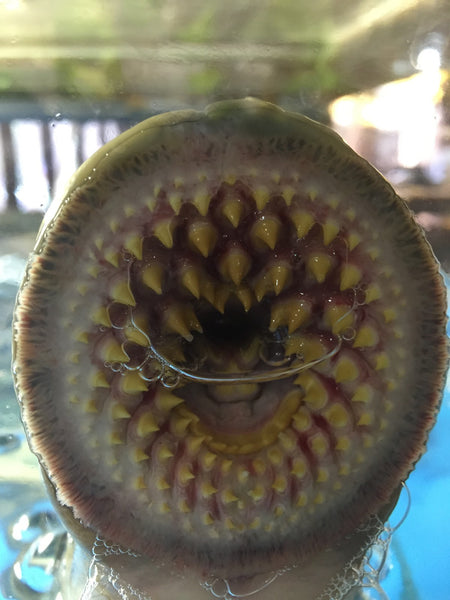
One last striking experience, which had nothing to do with wine, we had during our visit to the restaurant "O Gavetto" in Matosinhos. Miguel Louro had recommended us to eat the local specialty "Lampreia a Bordelesa". We didn't dare, however, and instead opted for the classic Bacalhau. Or would you have dared to eat this ancient creature?